
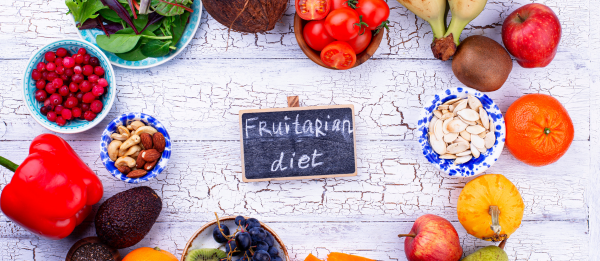
The persistent flaw in modern dietary discourse is the insistence on universality. This desire for a single correct human diet remains deeply attractive to the collective mind, yet it has very little basis in physiology or in lived experience. In reality, no single form of nourishment can serve every constitution. The belief in a universal biological truth is a myth. Human beings do not share one ancestral imprint, one climate, one microbiome, one psychological or emotional landscape. Humans are truly diverse, and our diet reflects that. Food is a relationship, not a rule.
Traditional Medicine and Constitution
Systems of traditional medicine understood the importance of constitution. They treated food not only as sustenance, but as information: as an energetic substance that interacts with the human organism, capable of bringing it into greater balance or pushing it further into imbalance. Whether we look to Ayurveda, Tibetan medicine, Chinese medicine, indigenous food lineage, or early Mediterranean and Persian teachings, there is no single prescription. Food is always contextual. Its effects depend on digestive fire, constitutional strength, season, climate, altitude, emotional disposition, pranic state, ancestral trauma, and the subtler patterns one carries in tissue and memory.
Why Fruitarian Absolutism Fails
This is precisely why fruitarian absolutism falters under deeper observation. The assumption that we should eat like primates or even the earliest hominids, because we share lineage with them, neglects the millennia of epigenetic changes that have occurred since those lineages diverged. Our cells now carry the imprint of migration, agriculture, malnutrition, sensory and chemical overload, chronic stress, antibiotics, poor dental and oral health, trauma and inherited nervous system fragility, as well as the deep mental and spiritual contraction that comes with the Dark Age, or “Kali Yuga”, as it is referred to in Hinduism.
Furthermore, the very intensity of modern fruit, grown under altered soils, climates, and sugar ratios, is often more than the average nervous system can metabolise without destabilisation. Fruit today is not simply “fruit”. It is the result of centuries of selective amplification of sweetness. We have created varieties that are more sugary, less fibrous, and more stimulating than anything that existed in a wild state. The sweet flavour was once considered deeply nourishing, moistening, building, restorative. Intensified and hybridised, it becomes something else entirely: destabilising, upward-driving, sensitising to the point of overstimulation.
Overstimulation and Nervous System Fragility
This matters because our nervous systems, en masse, are already overstimulated. Most people are not grounded; they are hovering slightly above themselves trying to cope. To introduce large volumes of intensified fruit into such a system is often too much. Fruit heightens sensation. It sharpens perception. It brightens emotional reactivity and thins the buffer that protects us from the outside world. For some, that lift can be healing and enlightening. For most, it breaks the skin over time.
One sees this in practice. Countless individuals who attempt long-term fruitarianism do not become radiant and serene, but instead become overstimulated, unmoored, dysregulated, depleted and emotionally threadbare. This is not because fruit is impure or “wrong”, but because fruit amplifies. It sensitises. It lifts, heightens, expands, and electrifies. To live indefinitely in such an upward current requires a level of grounding and coherence that most modern bodies, through no personal fault, simply do not possess.
Endocrine Impact of Excessive Sugar
Another issue is the impact of excessive sugar on the endocrine system. Fructose in moderation is usually fine, but today’s hybridised, high-sugar, low-fibre fruits send many metabolisms into dramatic highs and equally dramatic crashes. The body was never meant to handle this level of sweetness, this often.
Dental Health and Systemic Consequences
Then there is the issue of dental health. In the modern era, very few people growing up in civilisation make it to adulthood without developing a number of dental issues. To make matters worse, many modern dental treatments, whilst they improve the function and aesthetics of the teeth, can make systemic health worse. Root canals, crowns, fillings, cavities, focal infections and periodontitis are all very common today. These issues make it much easier for anaerobic bacteria to colonise compromised teeth, finding plenty of little nooks and crannies where they can hide from the immune system. These anaerobes feed off dietary sugars and other debris. A high fructose diet in such individuals adds an enormous amount of fuel to the fire, contributing to systemic inflammation and autoimmunity.
The Misunderstood Role of Fat
A common argument in fruit-focused circles is that dietary fat dulls awareness. And perhaps there is some truth to the observation that fat is “desensitising”, but who is to say that this is undesirable? In truth, fat lubricates; it protects the vessel that consciousness inhabits. Fat pacifies; it cools the volatility of emotional charge and provides the nervous system with density, warmth, and structure. Fat produces steadiness where fruit produces flight. Moreover, fat is highly metabolically active; it is the building block of countless hormones and secretions, which are vitally important to the organism, especially in the modern age of overstimulation and burnout.
Many even claim that our absolute need for dietary fat is zero. And whilst it is true that for those who are constitutionally heavier or stagnant, fat should be consumed in moderation, as excess may become obstructive and problematic, to cut it out entirely could still be very harmful. For those of us who are porous by birth, fat is medicine. It is not dulling; it is stabilising.
A Personal Illustration
In my own case, heightened sensitivity was present from the beginning. I experienced the world with almost no internal buffer, and while that sounds poetic in spiritual language, it is enormously difficult to live with in real environments. A high fruit, low fat diet amplified everything to the point where ordinary life became overwhelming. Only when I reintroduced fat did clarity become inhabitable.
My diet remains fruit based, as I love the quality of energy and clarity that raw fruits provide, yet it is very low in sugar. There is an abundance of low glycaemic fruits available, such as cucumbers, olives, avocado in moderation, limes, lemons, berries, guava, passionfruit, bitter melon, soursop varieties that are more tart than sweet, salak, calamansi and others. Alongside these, I enjoy fibrous, oily nuts such as pecans, macadamias and walnuts, plenty of organic greens, sprouts, warming spices, healthy oils and, when my body asks for it, the occasional egg or small amount of fish. My system runs primarily on ketones and functions with a level of calm, clarity and coherence that no other dietary approach has ever provided. This way of eating fits my constitution perfectly. Sensitivity remains, but now it feels centred rather than edgy.
Health as Movement Toward Centre
This is why health cannot be treated as an absolute state. It is not a fixed peak to reach, but a movement back toward the centre. A person who is overstimulated does not need more ascent, more lifting, more brightness. They need containment, warmth, and quieting. A person who is stagnant, cold, heavy, or dormant may indeed need the incisive lightness of fruit to cut through density. The movement toward balance is what defines health, not adherence to a dietary ideal.
There is no singular diet for humankind because there is no singular human centre. When each body moves toward its own equilibrium, without coercion, without doctrinal force, without anxiety about belonging to the right camp, health ceases to be performance and becomes what it has always quietly been: a movement back to home.
Exceptions and Kindness
None of this is to say that fruitarianism is impossible. It is not. I know people who thrive on it, and I know others who healed profoundly on a fruit-based regime for a season of their lives. My point is simply that these individuals are the exception rather than the rule. For most people, long-term fruitarianism is not sustainable, not because of lack of will, but because we are not yet physically, emotionally, mentally, or spiritually stable enough for that level of intensity. And that is nothing to judge. It is simply where humanity stands at this moment in time.
And this brings me to my final but possibly most important point: the importance of simple kindness, to self and others. Many of us have absorbed so much harshness from the world, through no fault of our own. It came through culture, family, schooling, relationships, and a thousand small (or not so small) injuries along the way. It is no surprise, then, that conversations about food can become so sharp and moralistic when they ought to be gentle. If we brought more softness to these exchanges, if we allowed room for difference without threat or superiority, the entire tone of nutritional discourse would shift. Food would stop being yet another instrument of self-judgement or group righteousness. It could return to its rightful place as nourishment, not ideology.
There is no singular diet that suits all humans, because there is no singular human. To accept this is not to abandon rigour, but to mature beyond absolutism. The body knows far more than theory does, and when we start to listen to it with as much reverence as we listen to our chosen gurus and heroes, clarity and wisdom return, as well as far greater health and balance.
Wishing you abundant health and happiness!