
The Foreground and the Backdrop
In the modern day, the importance of presence and mindfulness - ancient wisdom woven through Yoga, Buddhism, and contemplative traditions across the world - has returned to prominence and for good reason: stepping out of linear time has real physiological, emotional and spiritual effects. Coherent states calm inflammation, regulate the immune system, and bring every gland and organ into smoother function. Presence stabilises the whole system.
However, the common idea that one can simply drop the past and the future is incomplete. Even when attention rests in the now, underlying impressions remain. The subconscious holds the residue of what we have been doing, feeling, and thinking. These impressions inevitably colour the present.
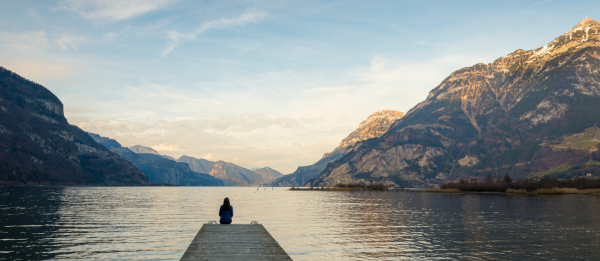
It is useful to imagine a portrait photograph. The person in the foreground is sharp and clear - this is our present moment. Yet behind them lies a blurred landscape. It is not the focus, but it shapes the whole image. Our backdrop is formed from our habits: hours at a computer, lack of sunlight, disconnection from nature, rushed days, transactional interactions, work pressure, conflict, overstimulation, and fatigue. All of this sits quietly behind the foreground, influencing tone, mood, and interpretation.
The Quality of the Inner Landscape
When we enter present moment awareness, we are simply bringing the foreground into focus, but the background remains. If it is filled with stress, depletion, and disconnection, then our experience of presence will carry a subtle, lingering aftertaste of that flavour. If it is well nourished, grounded, and harmonious, presence also reflects that and becomes clearer and easier to inhabit.
This makes it essential to cultivate habits that essentially "beautify the backdrop" of our present moment portrait. The more our daily life is infused with supportive rhythms, the more spacious and peaceful our present moment becomes. In this sense, presence is not only a mental practice; it is the natural expression of a well-tended inner landscape.
Nature as a Master Regulator
Of all possible habits, time in nature is one of the most reliable ways to transform the subconscious backdrop. Even fifteen minutes outdoors per day, ideally barefoot, begins to reset the system. The nervous system slows, inflammation drops, breath deepens, and mental clutter softens. Nature stabilises the entire organism effortlessly.
Many therapies and healing methods offer value, yet the simplicity of walking among trees, touching earth, or standing in sunlight often exceeds them. Nature restores coherence. It replenishes what artificial environments quietly drain. It widens the background of the portrait, adding spaciousness, balance, and vitality.
By making nature a daily habit, we gradually fill the subconscious landscape with something calm and harmonious. Then, whenever we step into present moment awareness, the foreground meets a backdrop that supports clarity rather than distorting it.
Presence eases. Awareness softens. And the prism of consciousness begins to reflect something quietly harmonious and beautifully balanced.